The choice between sporty and jewelry timepieces is a dilemma that accompanies many women planning to buy an exclusive watch. On the one hand, we have delicate models with crystals and slender bracelets, on the other – watches with a sporty pedigree, designed with functionality in mind. The question is: can these two worlds meet? Can a contemporary sports watch be as elegant as a jewelry watch? And can a chronograph be worn with an evening dress without violating the dress code?
How do sports watches actually differ from jewelry watches?
The fundamental difference lies in the design. Jewelry models are designed primarily as an ornament for the wrist – the priority is aesthetics, delicacy of forms and ornamental details. Cases are sometimes small, mechanisms are often quartz due to their small size, and materials are chosen for brilliance and visual effect. Leather straps in pastel shades, crystals on the dial, gold-plated elements – all to make the watch eye-catching.
Sports watches, on the other hand, are created with durability and functionality in mind. Larger cases, sturdier bracelets, water resistance, chronographs for timekeeping – these are features that originally served pilots, divers or racing drivers. Materials are chosen for ruggedness, not decorativeness. The dials must be legible in all conditions, and the design is shock-resistant. These are tools designed for use, not just for viewing.
The problem arises when we want one watch for different situations. A jewelry model may not survive an active lifestyle, while a sporty one can sometimes be too bulky for elegant occasions. However, the boundaries between these categories are beginning to blur – premium manufactures are increasingly creating watches that combine sportiness with jewelry-worthy finishes.
Can chronographs be elegant at formal meetings?
A chronograph is a complication involving the addition of a stopwatch function to a basic mechanism. It was developed in the 19th century as a result of the need for precise timing in motorsports and aviation. Two buttons on the sides of the case, additional hands and graduations on the dial – these are the hallmarks of the chronograph. For decades it was associated exclusively with sports and technology.
However, history shows that chronographs can be elegant. TAG Heuer women’s have been proving since the 1960s that sportiness does not exclude sophisticated design. The brand has specialized in chronographs since 1860, and in 1963 Jack Heuer designed the Carrera model – a watch with a very simple, legible design that went perfectly with both a driver’s suit and a suit. This model has lived to see ten generations and remains an icon of the elegant chronograph to this day.
The key is the proportion of the case and the harmony of the whole. A women’s chronograph with a diameter of 38-40 mm, with a clean dial without excess information, on a leather strap or a delicate steel bracelet can look as elegant as a simple watch with three hands. It’s important that the chronograph buttons are integrated into the case, rather than protruding too much. The finish matters too – polished steel, gold-plated components and careful dial details make a sporty watch suitable even for formal events.
What materials combine sporty durability with luxury?
For decades, sports watches were the domain of stainless steel – a durable, corrosion-resistant material, but not very visually noble. The breakthrough came in the 1970s, when Swiss manufactures began experimenting with modern materials, as was happening, for example, at IWC. Watches of this brand since the late 1970s pioneered the use of titanium and ceramics – materials previously reserved for the aerospace industry.
Titanium has proven to be a revelation. It is almost half the weight of steel, hypoallergenic and extremely scratch-resistant. The titanium case makes even a large chronograph weigh as much as a small ladies’ watch on a leather strap. This is important for women who value wearing comfort – a massive watch ceases to be a burden on the wrist. In addition, titanium has a matte, noble hue, which goes well with minimalist silver jewelry.
Engineered ceramic is another material that has changed the face of sports watches. It is harder than steel, practically scratch-resistant, and lightweight. What’s more, ceramic can be dyed in a variety of colors – from classic black to white to pastels. Women’s vintage watch made of ceramic is a rarity, as the material only became popular in the 21st century, but contemporary ceramic models combine sporty durability with even jewel-like aesthetics.
Also worth noting is the way the steel cases are finished. Alternating polished and satin-finished surfaces – a technique known as “brushing” – lends elegance to sports watches. As light reflects off the differently treated surfaces, the case gains depth and sophistication. It is the finishing details that determine whether a sports watch looks like a professional tool or a piece of jewelry.
When is a sports watch not a substitute for a jewelry watch?
There are situations where a sporty chronograph simply won’t be the right choice. A classic dinner at the opera, a charity ball, a black tie wedding reception – these are occasions where the watch should be subtle and blend in with the styling, not dominate it. A massive 42 mm case with pronounced chronograph buttons and a sporty bracelet may look too aggressive in the context of an evening gown.
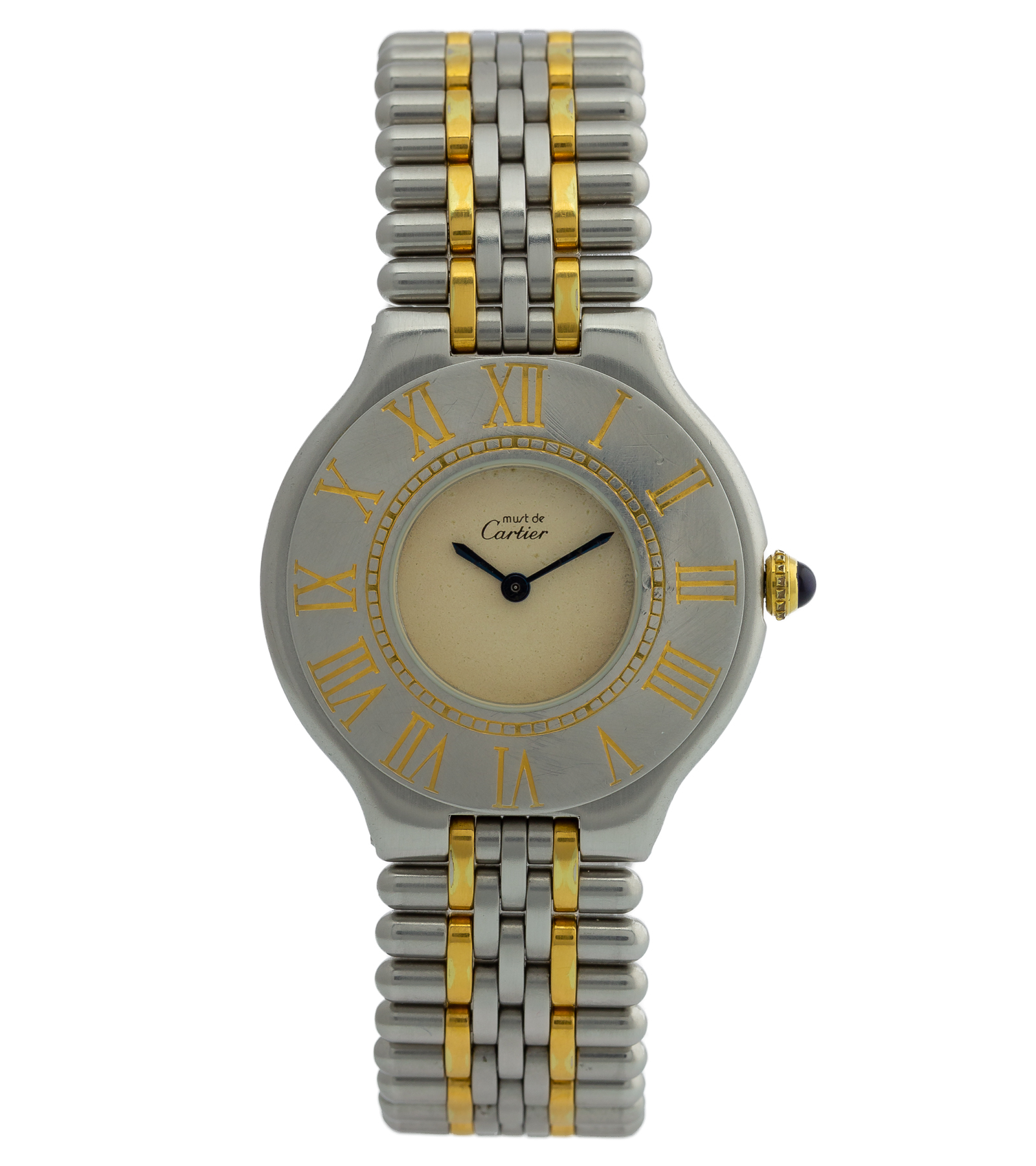
This is where jewelry watches have an unassailable advantage. A slender case with a diameter of 28-32 mm, a gold-plated bracelet resembling a jeweler’s chain, a dial decorated with crystals – such a watch is jewelry, not a gadget. For formal events it is worth having in the collection just such a model, which does not compete with the rest of the styling, but complements it.
Another limitation of sports watches is their size. Women with petite wrists may feel uncomfortable in large chronographs. A case that protrudes beyond the edge of the wrist looks bad regardless of the finish. Even the best-made watch in titanium or ceramic won’t work if the proportions don’t match the owner’s figure. Jewelry models are designed with slender wrists in mind, so the size issue is less often an issue here.
However, it is worth remembering that these are not rules that can never be broken. Fashion is evolving, and the modern dress code allows more freedom. A sports watch with a sophisticated finish, in muted colors, can be acceptable even at formal events – especially if the rest of the styling is decidedly elegant. The key is to maintain proportions and make an informed choice.
Do sports watches have collector value?
The answer is definitely yes, often more than jewelry models. Vintage chronographs from the 1960s and 1970s reach prices at auction many times their original value. Sports models from famous manufactures, especially those related to motorsport or aviation, are coveted by collectors around the world. Why? Because they combine history, technical innovation and limited availability.
Women’s vintage watch with a sporty character is a separate category. Unlike men’s chronographs, women’s versions were produced in much smaller numbers, making them less accessible. In addition, in the 1960s and 1970s, women wore sports watches less often – dainty and jewelry models dominated. This makes the surviving copies of women’s sports watches from that period particularly valuable today.
The collector’s value depends on several factors. First of all, it depends on the history of the model – whether it was associated with a sporting event, whether it was worn by famous people, whether it has an interesting story. The condition, the set (original bracelet, box, documents) and rarity also matter. Limited editions from sports collections of premium manufactures retain their value longer than mass-produced models.
When investing in a sports watch with future value in mind, it is worth betting on classic lines from reputable manufacturers. Models that introduced technical innovations – for example, the first watches made of titanium or ceramic – are likely to become icons. History shows that it is the sporty chronographs, not jewelry quartz watches, that gain more in value over the years. For the collector, it’s not just the crystals on the dial that count, but more importantly the craftsmanship, history and evolution of watchmaking technology.
Frequently Asked Questions:
How do women’s sports watches differ from jewelry models? Sports watches are designed primarily with functionality and durability in mind, so they have larger cases, easy-to-read dials and damage-resistant materials. Jewelry models, on the other hand, focus on aesthetics – they are often smaller, more ornate and treated as a styling element rather than a timekeeping tool.
Can a women’s chronograph match elegant styles? Yes, modern chronographs increasingly combine sporty character with elegant design. The right proportions of the case, a subdued dial and a high-quality finish mean that such a watch can look stylish even during official meetings or formal events.
What materials allow you to combine sporty durability with a luxurious look? Modern women’s sports watches use titanium and technical ceramics, among others, which are lightweight, scratch-resistant and at the same time look elegant. The way the case is finished also plays an important role – for example, the combination of polished and satin-finished surfaces, which adds nobility to the watch.
When does a sports watch not replace a jewelry model? During very formal occasions, such as black tie events or formal galas, a subtle jewelry watch may be a better choice. Slender cases and delicate details are easier to match with an elegant closet than larger and more technical sports models.
Do women’s sports watches have collector value? Many sports models, especially chronographs from renowned manufactures, are gaining in value due to their history, limited availability and technical innovations. Women’s vintage sports watches are often rare, which can make them particularly attractive to collectors.