



- Marki
-



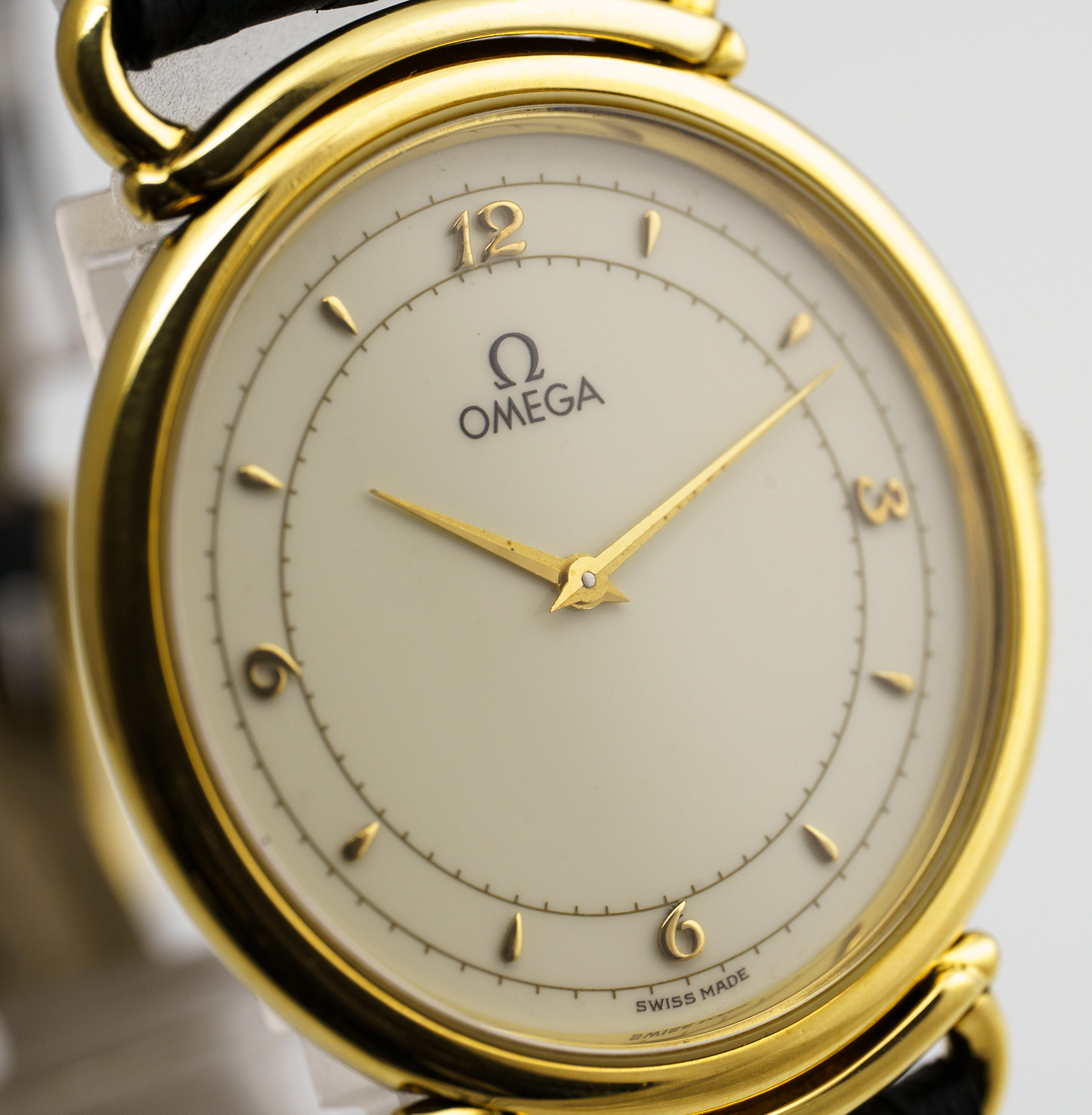
A mechanical watch is much more than a tool for measuring time. It is a precise microsystem made up of dozens and sometimes hundreds of parts that work in harmony to create a small masterpiece of engineering. One of the most important and fascinating parts of this system is the escapement – a small component responsible for regulating the rhythm of the watch. Without it, the watch would be useless. But what actually is the capture? How does it work? And why does its presence constitute the essence of a mechanical watch?
In the simplest terms, an escapement is a mechanism that dispenses energy from the drive spring to the balance, the element that regulates the watch’s operation. It is the escapement that is responsible for the ticking of the watch and makes the hands move at even, rhythmic intervals.
It can be compared to a valve in an engine – it controls the flow, opens and closes the access to energy at the right moments. The capture ensures that the energy from the spring does not discharge immediately, but is transferred gradually and precisely. The result? The watch works for dozens of hours, maintaining an accurate rhythm.
In a classic watch, the mechanism starts working when the spring is pulled. The energy from the spring goes to the gearbox, which turns the catch wheel. And this is where the role of the escapement begins: a special lever (the so-called anchor) locks and releases the teeth of the escapement wheel in a specific rhythm, regulated by the balance.
The balance – working at its own regular pace – moves the anchor, which in turn releases more teeth of the catch wheel. In this way, energy is transferred further – to the leads – but only if the balance “allows” it. It is this cooperation between the balance and the escapement that determines the accuracy of the watch.
Without the escapement, the energy from the spring would discharge in no time – the wheels would start turning at tremendous speed, and the watch would not be able to control the gait in any way. The escapement gives the watch a rhythm, makes every second, minute and hour have its place.
Moreover, the escapement not only regulates the pace of the watch, but also keeps the balance in motion. Each time the capture wheel releases a tooth, it transmits energy to the anchor, which passes it on – just to the balance. This cycle repeats several times per second. In most watches it’s 4, 6, 8 or even 10 vibrations per second (that’s 28,800 oscillations per hour).
Although the most common solution is the anchor (Swiss) capture, it is worth knowing that this is only one of many possible solutions. Here are some of the most interesting types of outriggers:
The most widespread. Simple, proven and durable. Used in the vast majority of mechanical watches – both manual and automatic. It works reliably, is easy to service and provides high precision.
Developed by George Daniels and used by the Omega brand. Reduces friction, resulting in longer life and a more stable gait. It is one of the greatest technological advances of the last decades in the field of capture.
Mainly used in marine watches and navigation clocks. Very precise, but delicate – prone to shocks, which makes it rare in wristwatches.
Invented by Breguet, now used in very advanced haute horlogerie watches. It combines the advantages of anchor and detent escapement, but is very difficult to manufacture.
Despite the popularity of quartz mechanisms, outriggers still appear in many timepieces. You can find them in such solutions as Maurice Lacroix Masterpiece watch. All models in the Masterpiece series are equipped with a traditional anchor escapement, while some variants also use modern elements, such as those made of silicon (for greater precision and durability). What’s more, in many models the capture and balance are visible on the dial – you can watch them in action.
TAG Heuer women’s watches are both quartz models, powered by a battery – without a catch) and mechanical automatic watches (with a catch). These include models such as Carrera, Aquaracer and Link. However, most of TAG Heuer’s basic women’s models are quartz versions – and therefore without a catch.
The outrigger may also have Frederique Constant women’s watch or men’s. However, it depends on the version. Frederique Constant produces both quartz watches (without an escapement) and mechanical watches (with an escapement). If you choose a model from the Ladies Automatic, Slimline Automatic or Classics Automatic series, it is very likely to be a watch with an automatic movement and anchor escapement. Quartz models from this brand – although also elegant – do not have an outrigger.
In many mechanical watches, the escapement is hidden under the dial or bridges of the mechanism. But there are also models that display it proudly – often in the form of a so-called “open heart”, where you can observe the balance and work of the escapement through a glass front or lid.
For watch enthusiasts, it’s a real pleasure – to see how the anchor and balance move rhythmically, creating the pulse of the watch. It is these visible mechanisms that make the watch cease to be just an accessory to an outfit and become a fascinating object.
Although anchor capture seems like a solution of the past, watchmakers continue to improve it. Silicon components – lightweight, durable, temperature and magnetic field resistant – are increasingly used. This makes the capture even more precise and resistant to wear.
Modern watchmaking doesn’t just cherish the tradition of capture – it advances it. It’s a field where microengineering, physics and design come together in surprisingly modern ways.
The escapement is undoubtedly one of the most important elements of a mechanical watch. Although small and often invisible, it is what gives the watch life. It regulates, controls, drives. It gives a rhythm that you can feel, hear and see – if you just look closely. Understanding what an escapement is changes the way you look at watches. It’s no longer just a pretty object – it’s a mastery of precision encapsulated in a few tens of millimeters.
The escapement is a key mechanism in a mechanical watch that regulates the flow of energy from the mainspring tension to the oscillator (balance). Thus, the escapement controls the regularity of the balance beats, which ensures the accuracy of timekeeping.
The most common types of escapement are anchor escapement and Swiss lever escapement. In older watches you can also find cylinder or English escapement, which differ in design and power transmission efficiency.
The precision of the escapement directly affects the accuracy of the watch’s gait. Any disturbance in its operation can lead to the watch’s acceleration or deceleration, so its careful manufacture and lubrication are crucial to the mechanism’s longevity.
The movement requires regular servicing of the mechanism, including cleaning, checking for wear on components and lubricating with special watchmaker’s oil. Only a qualified watchmaker can safely perform the maintenance so as not to damage the delicate parts.
Luxury watches use low-friction, high-wear-resistant materials (e.g., silicon, glidon alloy) and improved capture designs to increase precision, durability and resistance to shock and temperature changes.

Masz pytania? Chcesz porozmawiać? Chętnie pomożemy!
Pozostaw kontakt lub zadzwoń do nas.
Przed przyjazdem koniecznie umów spotkanie.
Przed przyjazdem koniecznie zadzwoń!
