



- Marki
-



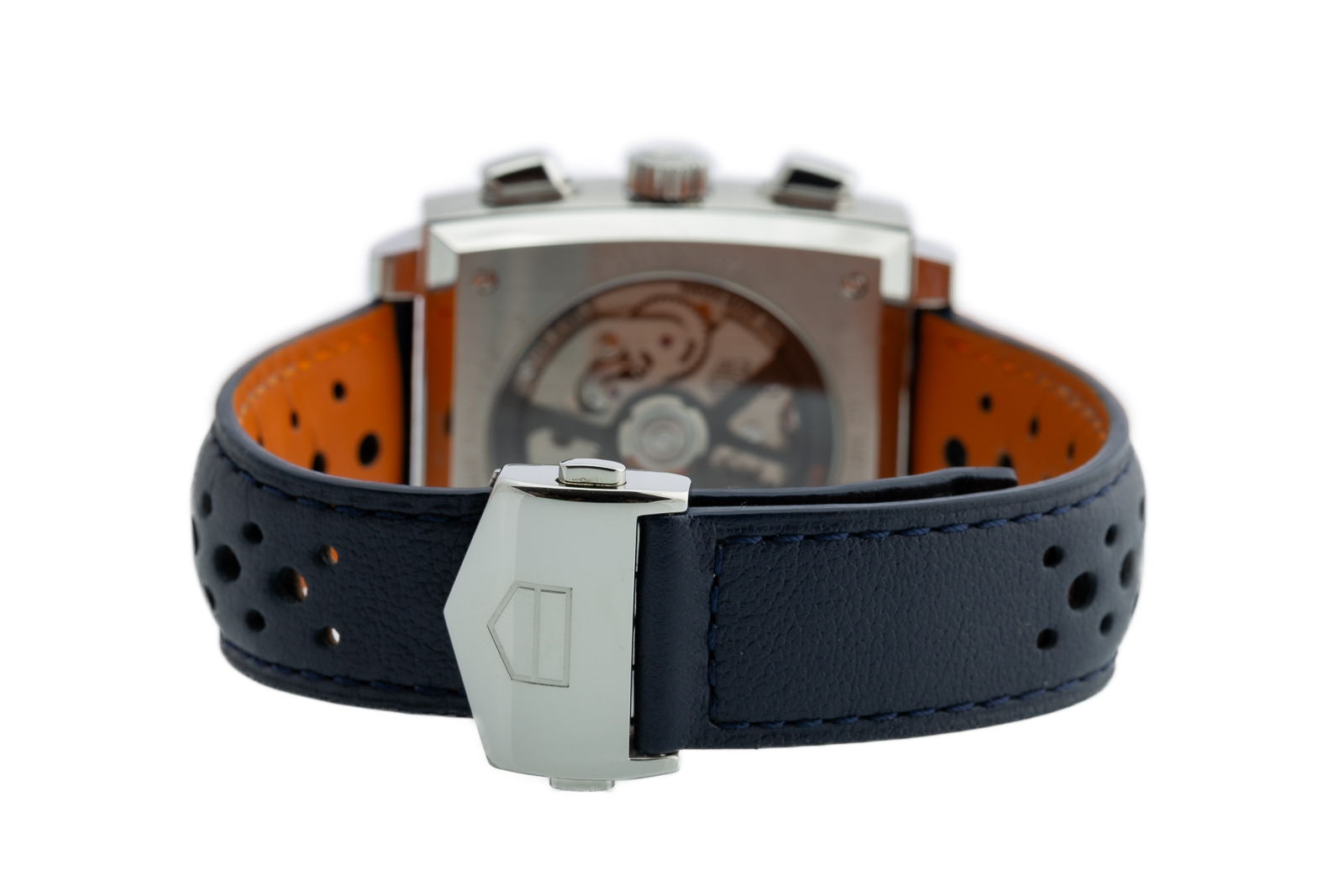
This question arises in the mind of anyone who becomes the owner of an automatic-winding timepiece for the first time. Since the mechanism winds itself when worn, why reach for the crown at all? Or is that precisely why not to? A lot of myths have grown up around this topic, which effectively deter owners from touching the crown. It’s time to dispel doubts and clarify when you can and when you should wind your automatic watch.
To understand whether you can wind an automatic watch, you must first grasp what its operation consists of. Inside the case, in addition to the classic mechanism with a driving spring, there is a special element called a pendulum or rotor. This is a crescent-shaped metal weight that freely rotates on its axis with each movement of the wrist. When you move your hand by walking, gesturing or performing everyday tasks, the pendulum also moves.
This movement translates into energy, which, through a system of gears, goes to the drive spring and turns it. The spring stores this energy and gradually gives it back to the mechanism, driving the hands. In practice, this means that if you regularly wear the watch for several hours a day, you never have to think about winding it. The mechanism takes care of itself, drawing energy from your activity.
Here is where the first important issue begins. Most modern automatic watches are designed with the possibility of manual winding via the crown. This is a very practical solution, which allows you to start the watch without having to shake it vigorously for several minutes. Just a dozen gentle turns of the crown and the mechanism starts working.
However, not all models offer this feature. Older designs, especially those from the 1960s and 1970s, often had purely automatic mechanisms, without the possibility of manual winding. In such watches, attempting to wind with the crown simply accomplishes nothing – it rotates loosely, without transmitting energy to the spring. Therefore, before attempting to wind the first time, it is worth looking at the manufacturer’s instructions or asking the seller about the capabilities of a particular model.
There are situations in which hand-winding becomes not only possible, but even advisable. The most common one is simply a long standstill. If your watch has been lying in a drawer for several days, it has exhausted its gait reserve and stopped. The standard reserve for most automatics is about forty hours, although modern solutions can reach up to seventy or eighty hours.
After such a stop, you can, of course, put the watch on your wrist and wait for the pendulum to gradually wind the spring. The problem is that in the first hours the mechanism works with little energy, which can affect the accuracy of the indication. Therefore, a sensible solution is to gently wind the watch with the crown before putting it on the wrist. Ten to fifteen quiet turns are enough for the mechanism to take on a life of its own and start working with proper precision.
The winding process requires delicacy and feeling. First of all, it is best done with the watch removed from the wrist, holding it in one hand and turning the crown with the other. This prevents unnecessary tension on the crown stem, which could lead to the crown coming loose or damaging the seals over time.
Turn the crown in the direction of the watch, smoothly and steadily. At some point you will feel a gentle resistance – this is a sign that the spring is already well stretched. Do not force this resistance. Modern mechanisms have a built-in anti-twist feature, but why risk it? A fully tensioned spring will give you enough gait reserve for days to come.
It’s also worth remembering one important rule about the date display. If your watch has a date display, never switch it manually between the hours of twenty-two and two in the morning. During this time, the mechanism switches the date on its own and any outside interference could damage the delicate gears responsible for this function. Similarly Tag Heuer women’s watch or other timepieces with complications require special attention when switching the indications.
This is one of the most persistent myths in the world of automatic watches. Many people have heard that screwing the crown destroys the mechanism and should be avoided at all costs. In reality, the case is quite different. It is not the winding itself that poses a danger, but the frequent stopping of the mechanism and its restarting.
The automatic watch is designed for continuous operation. When you wear it regularly, all components are properly lubricated, the teeth of the gears work together harmoniously, and the whole thing functions under optimal conditions. Interruptions in operation mean that lubricants can become thickened, and the mechanism works with more friction when restarted.
Therefore, if you have several watches in your collection and rotate between them, hand winding before each wear not only does no harm, but actually helps keep the mechanism in good shape. Of course, we’re talking about a sensible approach – gentle, occasional winding, not daily winding to the stop despite the fact that the watch works flawlessly.
For those with a larger collection of automatons, there is an elegant solution to the problem of stopping – the rotomat, or watch winding device. This is a small case equipped with a motor that simulates the natural movements of the wrist, keeping the pendulum in constant motion. As a result, the watch is always wound and ready for use, and the mechanism does not experience interruptions.
Is it a necessary gadget? For someone who wears one watch every day – absolutely not. For a collector rotating between several automatic watches, who wants to have each of them always ready, with the date and moon phases set correctly – yes, of course. Modern rotomats can be programmed for a specific model, adjusting the direction of rotation and its intensity to the specifications of the particular mechanism.
It is also worth noting that Rado men’s watches with ceramic cases or Rolex men’s watch with complex complications feel particularly well in rotators, where they retain full functionality without the need for time-consuming adjustment of all indications after each stop.
Yes, although they apply to specific designs. Some manufacturers make it clear in their manuals that a particular model should not be wound by hand. This is the case with very delicate mechanisms or those that have an unusual design of the automatic module. Ignoring these recommendations can indeed lead to a costly repair.
Besides, there are universal rules of caution. Never wind the watch by force, even if you think the spring is not fully stretched. Don’t turn the crown violently or chaotically. Avoid winding at extreme temperatures when the metal is expanding or contracting. These are simple rules, but following them significantly extends the life of the mechanism and avoids unpleasant surprises.
Remember, too, that a watch is a precision instrument in which hundreds of microscopic components work together in perfect harmony. Any violent interference, excessive pressure or use of force can upset this balance. Therefore, treat your automatic watch with the respect and delicacy that the craft of watchmaking deserves.
Yes – an automatic watch can be wound manually by gently turning the crown, as the automatic mechanism has a drive spring that can be replenished by both wrist movement and by winding the crown, which is useful after a long period of non-use or when the watch has stopped walking.
An automatic watch has an internal rotor that, thanks to the movement of the wrist, drives the spring, but if the watch is unmoved for a long time, its spring may relax; then a manual tightening of the crown replenishes the energy and allows the mechanism to start working, but this does not replace the daily operation of the automatic system.
Gently winding an automatic watch with the crown won’t do any harm, as long as it’s done correctly and sensitively, without excessive force; manufacturers usually allow hand tightening, but you shouldn’t overdo it to avoid overloading the drive spring.
It’s a good idea to wind an automatic watch by hand when the watch has been sitting motionless for several days, or when you want to run it without wearing it right off the shelf; winding it by hand helps build up energy in the spring more quickly and speed up the mechanism to steady operation.
Not all automatic watches have a manual winding function – some older or cheaper mechanisms may not allow this; it is worth checking the manufacturer’s specifications, because if the watch offers crown winding, it is described in the manual and should work without risk of damage.

Masz pytania? Chcesz porozmawiać? Chętnie pomożemy!
Pozostaw kontakt lub zadzwoń do nas.
Przed przyjazdem koniecznie umów spotkanie.
Przed przyjazdem koniecznie zadzwoń!
